

123456®
VOC Decomposer
Core Technology
Photocatalytic Reactor
VOC does not disappear on its own.
It remains in the air and enters the body with every breath.
Gas-Phase Reaction × Operational Stability × Measurable Reduction = VOC Decomposer™
🔥 The first household VOC photocatalytic reactor | True gas-phase VOC decomposition | Reduces indoor VOC concentration
Made in Taiwan
with 40+ years of export electronics manufacturing experience
What Is a VOC Decomposer™?
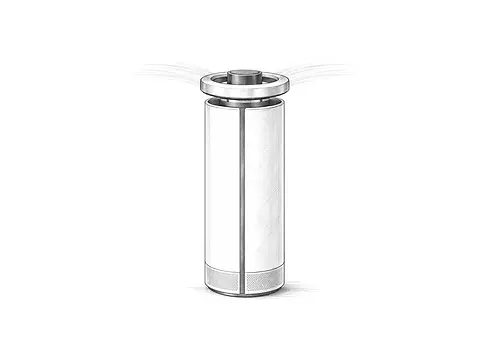
This product is built around a VOC photocatalytic reactor and integrates a multi-layer air-treatment structure, allowing volatile organic compounds (VOCs) in the air to undergo continuous oxidation reactions as they pass through the gas-phase reaction zone, thereby reducing indoor VOC concentration. The overall design is not merely intended to let air pass through the device, but to establish a sustained gas-phase decomposition process under stable airflow and reaction conditions.
Unlike most conventional air purifiers that mainly rely on filter media to adsorb or temporarily intercept pollutants, this product is not designed to simply collect VOCs, retain them in materials, or transfer them to another treatment interface. Instead, it uses photocatalytic reactions to change their molecular structure, allowing them to be gradually oxidized and decomposed during the reaction process, and ultimately converted into carbon dioxide (CO₂) and water (H₂O). Therefore, what this product pursues is not temporary retention or delayed release, but a molecular-level transformation of how pollutants exist, making it the best treatment approach for indoor VOC control.
Core Structure
This product is built around a multi-stage air-treatment path rather than a single material or a single treatment structure.
Its core design is based on a consumable-free operating principle, allowing the system to support particle control, odor treatment, and gas-phase VOC decomposition without relying on routine replacement of treatment media.
Air Treatment Path:
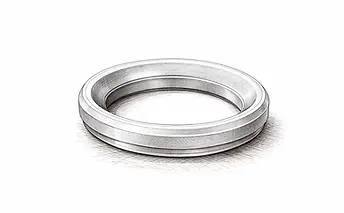
Air Inlet → Washable Pre-Filter → Washable Electrostatic Dust Collection Filter → Backward-Curved Centrifugal Blower → UV-Regenerated Activated Carbon → Lower Photocatalytic Honeycomb → UV Light Source → Upper Photocatalytic Honeycomb → Coandă Guide Ring → Air Outlet


How VOC Is Processed Inside

Where does VOC actually go after entering the machine?
After being drawn into the reaction chamber by the backward-curved centrifugal blower, VOC first passes through the UV-regenerated activated carbon. At this stage, part of the VOC is initially adsorbed by the activated carbon, while odor is also reduced, causing the VOC concentration in the air to drop temporarily.
When UV light regenerates the activated carbon, the VOC that was previously adsorbed is released again and continues forward through the lower photocatalytic honeycomb, the UV light source system, and the upper photocatalytic honeycomb. This means VOC does not simply remain trapped inside a single material, but continues moving into the next reaction path inside the machine.
When UV light irradiates the surface of the titanium dioxide (TiO₂) catalyst, it activates a photocatalytic oxidation reaction and further generates highly reactive oxidative species. These reactive species then react with VOC molecules that come into contact with the catalyst surface, gradually breaking down and reorganizing their molecular structure, ultimately converting them into carbon dioxide (CO₂) and water (H₂O), which are then released back into the air.
The key to this product lies in its ability to establish a stable reaction-condition space inside the reaction chamber, so that VOC is not merely adsorbed temporarily or released later, but can continue moving toward oxidative decomposition inside the machine, truly reducing indoor VOC concentration.